
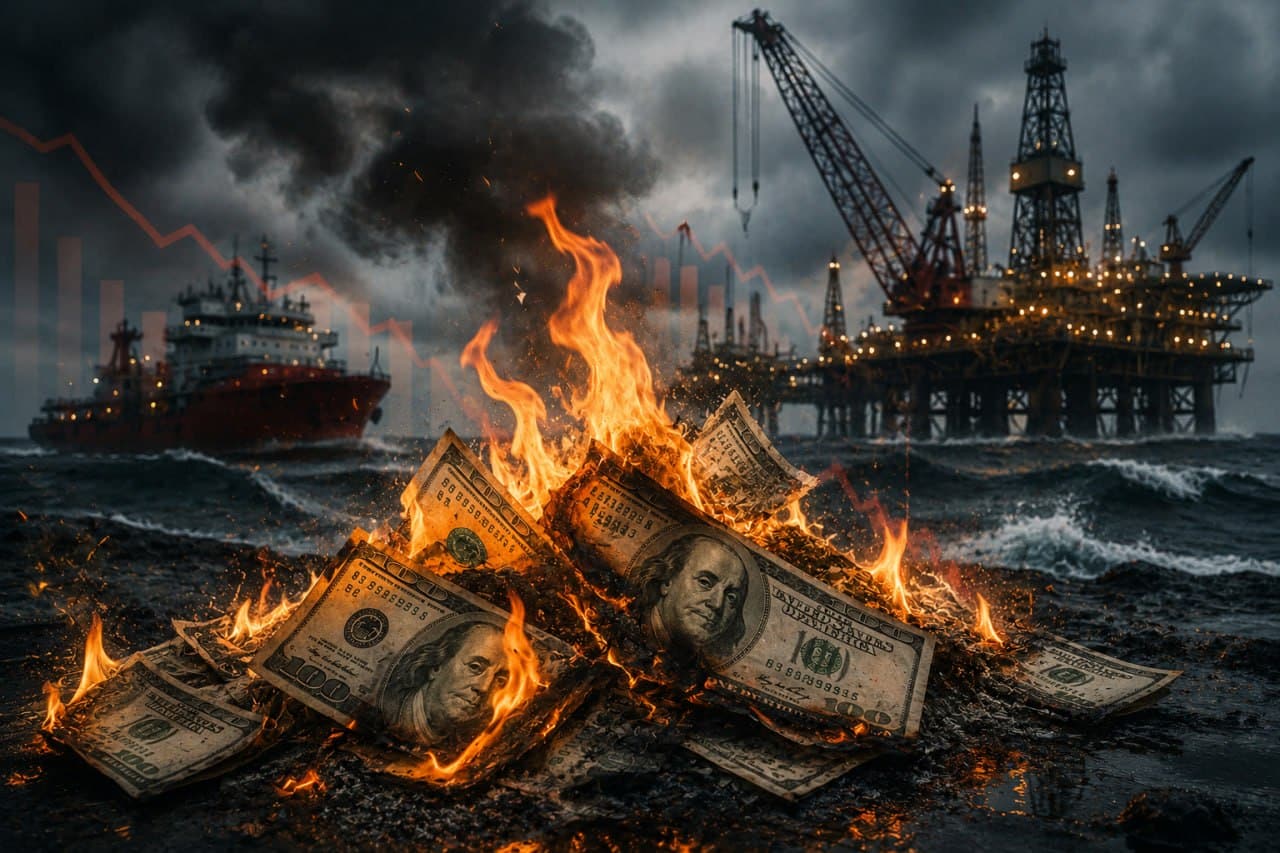
Every offshore project begins long before the first vessel leaves the port. It starts with engineering drawings, design reviews, risk assessments, installation procedures, procurement meetings, and countless technical discussions between engineers, EPC contractors, equipment manufacturers, vessel operators, and clients. On paper, everything may appear perfectly coordinated.
Yet once offshore operations begin, companies sometimes discover unexpected equipment clashes, restricted crane movements, inaccessible maintenance areas, inefficient installation sequences, or misunderstandings between project teams. By that stage, solving a problem is no longer measured in hours—it can cost hundreds of thousands, or even millions, of dollars. Ironically, many of these problems are not caused by poor engineering. They are caused by poor communication of good engineering.
Engineering Doesn’t Fail. Communication Does.
The offshore industry is one of the most technically demanding industries in the world. Modern projects combine structural engineering, naval architecture, subsea systems, mechanical equipment, electrical infrastructure, logistics, HSE requirements, and highly coordinated installation methodologies. Every discipline generates its own technical documentation.
Thousands of drawings, specifications, calculations, procedures, and reports are exchanged throughout the life of a project. The problem is that engineering documents explain what has been designed, but they rarely demonstrate how the entire operation will actually work.
A structural engineer may immediately understand a fabrication drawing.
A vessel superintendent is focused on lifting operations.
A project director wants confidence that the installation sequence is practical.
An investor simply wants to understand how the project will be executed.
Although everyone is discussing the same project, they are often visualizing it in completely different ways.
That communication gap creates uncertainty.
And in offshore projects, uncertainty is expensive.
The True Cost of Misunderstanding
Offshore operations rely on some of the most expensive assets in the industrial world.
Heavy-lift vessels, cable-laying vessels, installation barges, DP vessels, offshore cranes, and specialized construction equipment can cost hundreds of thousands of dollars per day to mobilize and operate.
When an engineering issue is discovered offshore instead of during project planning, the consequences can include:
- Delayed installation campaigns
- Additional vessel days
- Equipment modifications
- Schedule overruns
- Contractual disputes
- Increased HSE risks
- Loss of client confidence
None of these outcomes are desirable.
Many of them are avoidable.
The earlier a potential issue is identified, the less expensive it is to solve.
Drawings Explain Components. Visualization Explains Operations.
A traditional engineering drawing can accurately define dimensions, tolerances, materials, and fabrication details. But it cannot easily answer questions such as:
- How will this component be transported?
- Which crane performs the lift?
- Where should the installation vessel be positioned?
- How will multiple vessels interact during the operation?
- Can maintenance personnel safely access the equipment after installation?
- Does the installation sequence introduce unnecessary operational risks?
These are not design questions.
They are operational questions.
They involve movement, timing, interaction, and spatial awareness.
They require people to see the engineering rather than simply read about it.
Technical visualization transforms engineering data into a complete operational story that everyone—from engineers to executives—can understand.
Small Problems Become Multi-Million-Dollar Problems
A typical offshore installation campaign is a chain of interconnected activities. One operation depends on the successful completion of another. A lifting sequence influences vessel positioning. Vessel positioning affects cable routing. Cable routing impacts subsea installation. Subsea installation determines commissioning activities. When one assumption proves incorrect, the consequences ripple throughout the project.
A minor clash between two components or an overlooked installation constraint may appear insignificant during engineering reviews. Offshore, however, that same issue can delay an entire campaign. The engineering may have been technically correct. The project team simply never visualized how everything would work together.
Technical Visualization Is Not Marketing
One of the biggest misconceptions in the offshore industry is that technical animation is primarily a marketing tool. While high-quality animations certainly support marketing and business development, their greatest value is often found behind closed doors. Many of the most effective technical visualizations are created for internal engineering purposes, including:
- Design verification
- Installation planning
- Engineering reviews
- Client approvals
- HAZID and HAZOP workshops
- Crew training
- Safety briefings
- Operational planning
The objective is not to impress an audience.
The objective is to improve engineering decisions before offshore execution begins.
Winning Confidence Before Winning Contracts
Today’s clients expect more than technical capability. They expect confidence.
During competitive tenders, multiple contractors may submit proposals that satisfy the same technical requirements. What often differentiates one proposal from another is how effectively the engineering solution is communicated.
When decision-makers can clearly visualize an installation methodology, understand equipment interaction, and follow the operational sequence from beginning to end, confidence increases significantly. Visualization transforms complexity into clarity.
And clarity builds trust.
Better Training. Safer Operations.
Training offshore personnel is expensive. Learning through operational mistakes is even more expensive. Technical visualization enables engineers, technicians, operators, and offshore crews to understand procedures before arriving at the worksite. Instead of relying solely on drawings and written manuals, teams can observe the complete operation exactly as it is intended to occur.
They understand:
- Equipment movement
- Installation sequences
- Hazard zones
- Access routes
- Emergency procedures
- Vessel coordination
Better understanding leads to better preparation.
Better preparation leads to safer operations.
Offshore Projects Continue to Become More Complex
The offshore industry is evolving faster than ever. Floating offshore wind farms. Carbon capture and storage projects. Hydrogen infrastructure. Autonomous vessels. Advanced subsea robotics. Next-generation cable installation systems.
Every new technology introduces additional engineering disciplines, more stakeholders, and increasingly complex project interfaces. As complexity grows, technical communication becomes just as important as technical design. Companies that continue relying solely on static drawings and lengthy reports risk creating misunderstandings that could have been prevented through visualization.
A Lesson We Have Learned
Over the years, our team at International Energy Club has produced more than 850 minutes of specialized technical animations for over 150 companies across 32 countries, covering offshore oil and gas, subsea construction, offshore wind, marine transportation, ports, and renewable energy projects.
Throughout these collaborations, one lesson has remained remarkably consistent. The greatest value of technical visualization is rarely the animation itself. Its true value lies in the conversations it creates before construction begins. When engineers, contractors, clients, and decision-makers all look at the same visualization, assumptions become visible.
Questions are raised earlier.
Risks are identified sooner.
Solutions become clearer.
The result is not simply a better presentation.
It is often a better project.
Final Thoughts
The offshore industry has never lacked engineering expertise. What it sometimes lacks is a common language capable of translating complex engineering into shared understanding. Technical visualization provides that language.
It helps engineers communicate more effectively, supports safer operations, improves collaboration between stakeholders, strengthens client confidence, and reduces the risk of costly misunderstandings before they become offshore realities. In an industry where every offshore day carries significant financial consequences, the ability to see a project before building it is no longer a competitive advantage alone. It is rapidly becoming an essential part of modern offshore engineering.
#Offshore